The Reductionist Unscientific Approach Linking Armed Conflicts to Climate Change: Syria as a case Study
By: George Kurzom
https://www.maan-ctr.org/magazine/article/4650/

The Syrian Conflict during the Second Decade of the Current Century
Exclusive to Environment and Development Horizons (Afaq magazine):
The Syrian conflict is perhaps the most frequently cited case in the debate over the alleged link between climate and conflict, with the drought that occurred between 2006 and 2010 often considered an important causal factor. Advocates of this narrative highlight the collapse of the agricultural system and the subsequent migration from rural to urban areas as the two main mechanisms connecting environmental stress to political unrest. However, a detailed analysis by Selby et al. (2017) reveals significant methodological limitations in these attributions; their research identifies major inconsistencies in migration estimates, challenges the simplified sequence of drought–migration–conflict, and underscores the importance of state repression, religious dynamics, and structural economic reforms in the outbreak of the conflict. Environmental factors may have exacerbated existing vulnerabilities, but they cannot be reliably established as necessary or sufficient conditions for the onset of conflict.
In the same context, the exploitation of water resources in Turkey at the expense of its southern neighbor, Syria, triggered an agricultural crisis. This crisis led to the migration of thousands of Syrians to major cities; this particular conclusion contradicts the claim made by many researchers in recent years that Syria’s agricultural crisis was the result of a prolonged drought linked to climate change.
Among the most prominent “scientific” bodies that promoted the latter claim specifically regarding Syria, we note here what was published at the time by the International Institute for Sustainable Development (IISD), based in Canada, which conducts research on many aspects related to climate change. The institute released highly bleak data, asserting that around 160 Syrian villages were abandoned by their inhabitants during 2007–2008 due to unprecedented, prolonged drought and water scarcity in the region. This shortage of water undermined the livelihoods of residents in these villages, most of which are located in northern Syria, prompting them to relocate in search of survival. The report completely ignored the primary and direct cause of the water shortage—namely, Turkey’s seizure and control of the Euphrates River’s waters, which effectively deprived Syrian farmers of the water they needed.
Drought and the Outbreak of Wars
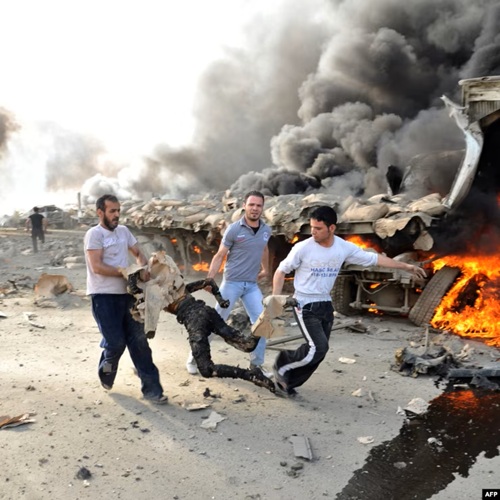
In recent years, numerous articles and reports have been written on the relationship between the severe droughts that struck Syria—particularly during 2006–2009—and the outbreak of the bloody war there (prior to the fall of Bashar al-Assad’s regime). These narratives claimed that the Syrian government failed to address the acute water crisis caused by drought. However, such accounts deliberately omitted the reality of Turkey’s role in the water scarcity and drought that Syrian farmers have endured.
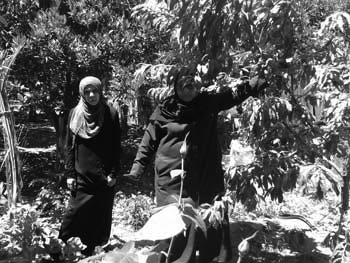
The result was the loss of livelihood for more than one million Syrian farmers, forcing them to abandon their homes in rural areas in search of new income sources in urban centers. As a consequence, cities such as Daraa in southern Syria experienced uncontrolled population growth, leading to deepened poverty and water shortages. In 2011, Daraa became the focal point of the initial popular uprising against the Syrian regime.
Subsequently, that popular movement was infiltrated by foreign powers—foremost among them the United States and Turkey—alongside several political regimes in the Arabian Gulf that supported, financed, and armed thousands of foreign and Salafist fighters who invaded Syria, bringing with them destruction, devastation, and fragmentation. These invading forces also used water as a weapon of pressure during the fighting.
In 2013, for example, the so-called Islamic State (ISIS) seized control of the Euphrates Dam (also known as the Tabqa Dam), located on Lake Assad. This is the largest water dam in Syria, situated on the Euphrates River in Raqqa Governorate. ISIS threatened to flood the areas surrounding the city of Raqqa.
The Collapse of Agriculture and the Outbreak of War
Whether the collapse of agriculture in Syria was responsible for the social and political tensions that led to the outbreak of war remains a matter of debate among researchers, although some believe it played a significant role. The key issue, however, is that the reduced rainfall in the years preceding the war undermined Syrian farmers’ ability to cope with Turkey’s restrictive water policies. Syria obtains roughly 60% of its water from the Euphrates River, whose flow originates in Turkey, and the river is likewise a vital water source for the Turks.
In this context, significant differences can be observed in the condition of agricultural crops in Syria compared to Turkey, differences directly linked to the use of Euphrates water. To assess crop conditions, researchers used a measure known as the NDVI (Normalized Difference Vegetation Index), which relies on satellite imagery. The analysis revealed that in both countries there had been a steady increase in the growth of irrigated vegetation until about one year before the outbreak of the war. After that point, there was a marked increase on the Turkish side, in contrast to a sharp decline on the Syrian side.
Further evidence of change linked to irrigation water availability comes from the case of cotton—a crop that was once among the most important to the Syrian economy and is highly dependent on irrigation rather than rainfall. Since 2011, cotton cultivation has steadily declined, virtually disappearing within five years.
The Diversion of the Euphrates River
The changes in crop yields also correspond with shifts in the exploitation of water resources in Turkey. Specifically, Atatürk Lake—the largest water reservoir in Turkey, fed by the Euphrates River—experienced a substantial increase in water volume in 2010, while the water level in Assad Lake—the largest reservoir in Syria—declined. This was due to Turkey diverting the river’s flow, in obvious violation of its agreement with Syria.
In sum, climate change does indeed affect rainfall levels in the Levant in general, and in Syria and Turkey in particular. However, examining the events leading up to the war in Syria leads to the conclusion that the abandonment of agriculture in northern Syria was the result of massive diversions of Euphrates water for use in Turkey, in clear breach of the bilateral agreement on the river’s utilization.
Therefore, we cannot conclude that political instability in Syria at the time was merely circumstantially linked to drought. It can be assumed, however, that the reduced rainfall in the years preceding the war delayed Syrian farmers’ ability to cope with Turkey’s water policies. Yet, reduced rainfall does not necessarily cause conflicts such as the bloody war and social unrest that unfolded. Nonetheless, it is reasonable to expect that as the climate crisis worsens, its role will become increasingly significant.
References:
- Benjaminsen, T. A., Alinon, K., Buhaug, H., & Buseth, J. T. (2017). Does climate change drive land-use conflicts in the Sahel? Journal of Peace Research, 49(1), 97-111.
- Kevane, M., & Gray, L. C. (2008). Darfur: Rainfall and conflict. Environmental Research Letters, 3(3), 034006.
- Selby, J., Dahi, O. S., Fröhlich, C., & Hulme, M. (2017). Climate change and the Syrian civil war revisited. Political Geography, 60, 232-244.
- Lackner, H. (2019). Yemen in Crisis: The Road to War. Verso Books.
- Ide, T., Brzoska, M., Donges, J. F., & Schleussner, C. F. (2020). Multi-method evidence for when climate-related disasters contribute to armed conflict risk. Global Environmental Change, 62, 102063.
- Mach, K. J., Kraan, C. M., Adger, W. N., Buhaug, H., et al. (2019). Climate as a risk factor for armed conflict. Nature, 571(7764), 193–197.
Translated by: Rasha Abu Dayyeh


.jpg)